Russian Banya Tent: Ritual of Steam, Whisking, and Rebirth A few years ago we received an email from a Russian guy, Alexander Baybarin, who was seeking a cover for a Banya tent. We worked together with him to design it and came up with the right materials so the heat would be held inside. We […]
Russian Banya Tent: Ritual of Steam, Whisking, and Rebirth
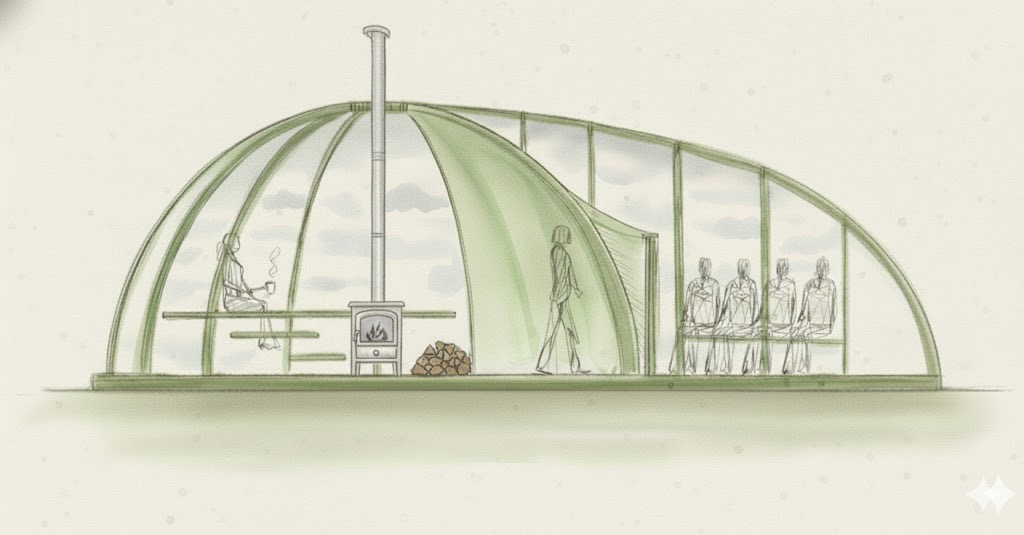
A few years ago we received an email from a Russian guy, Alexander Baybarin, who was seeking a cover for a Banya tent. We worked together with him to design it and came up with the right materials so the heat would be held inside. We suggested an Alachigh which he thought was amazing, but we lost touch with him, he maybe used another tent instead. So we put it in the drawer of unrealised/onedaymaybe projects and then we reached into the drawer and this one came out.
The Russian Banya is like a sauna but unlike the dry heat of a Finnish sauna, the Russian banya is an intense, humid steam, or par. It’s a deep-rooted cultural tradition, a social ritual, and a powerful experience of purification and well-being. For centuries, this steam bath has been an integral part of life in Russia, where you emerge feeling, as the saying goes, “washed—born again”
Heart of the Heat: Steam and Humidity
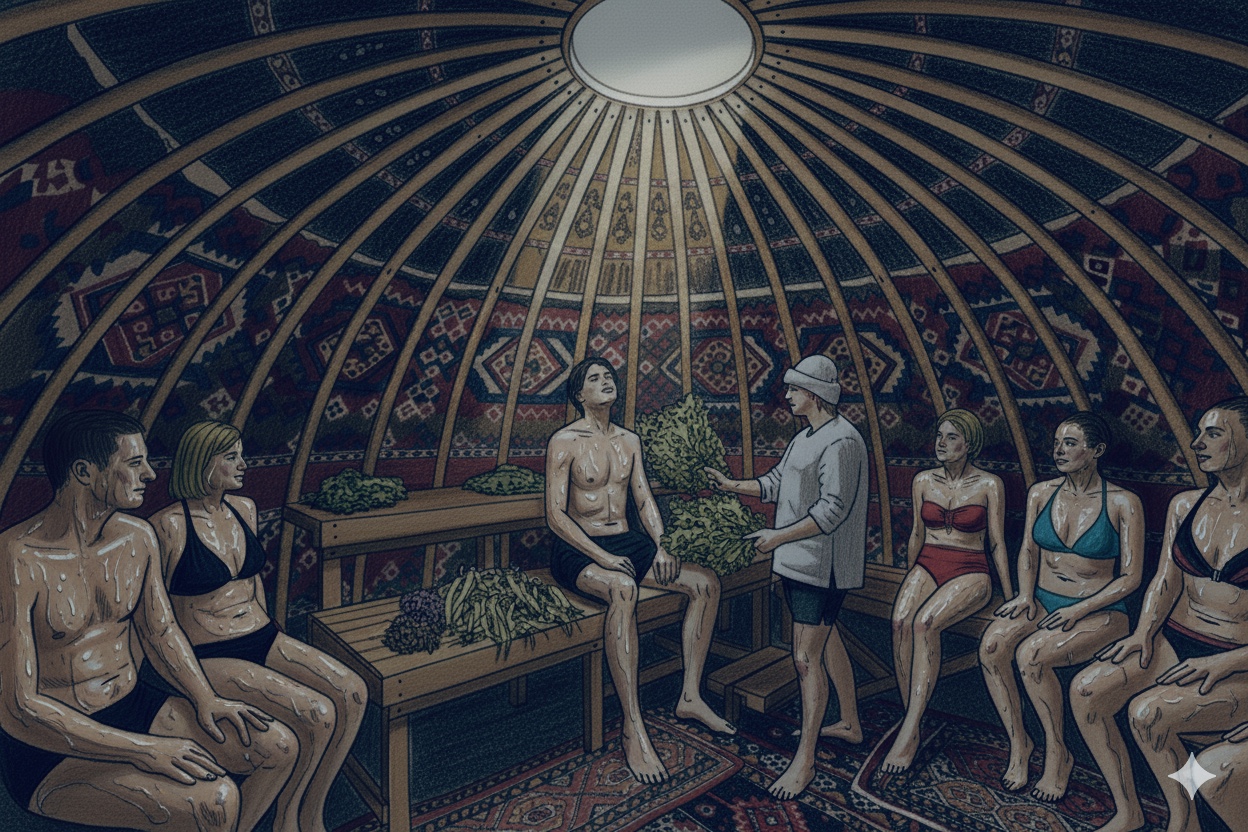
Steam Room (Parilka): This is the core of the Banya. Heat is generated by pouring water over a stove containing heated stones. This creates thick, moist steam, with high humidity levels at temperatures that can be quite high.
“Black” vs. “White” Banyas: Historically, a “black banya” had no chimney, allowing the smoke to fill the room before eventually escaping, blackening the wood and imparting a distinct, primal scent. Modern “white banyas”use chimneys for a cleaner, more comfortable experience.
Banya Hats: Not just for show – It’s a crucial element of the Banya, used to protect your head and hair from the heat, preventing overheating and allowing you to stay in the Banya for longer.
So you enter the Banya….be prepared for a sudden rush of heat.
The Ritual Part: Parenie with a Venik
The most iconic and essential part of the Banya is the ritual known as Parenie (steaming/whisking), which involves the use of a Venik, a bundle of leafy branches, most commonly birch or oak, but sometimes eucalyptus. Beforehand, branches are soaked in hot water to soften the branches and release aromatic, beneficial essential oils.
The Venik Massage is a skilled, vigorous steam massage. Someone in the Banya with some experience will give this to you.
Waft Hot Air: They use the venik to drive the hottest steam down and across your body.
Massage and Exfoliate: The leafy bundles are used to gently massage, tap, and press the skin. This stimulates your blood circulation, exfoliates dead skin cells, and helps release toxins through intense sweating.
The venik ritual is therapeutic, invigorating, and fills the air with a beautiful, natural smell, making the experience totally deep and sensory.
Cold Water Plunge
After the intense heat of the parilka and the parenie ritual, the next step is a sudden, extreme cool-down.
Methods of Cooling: This can involve:
Tipping a large bucket of icy water (a bucket shower) over your head.
Entering the cold sea.
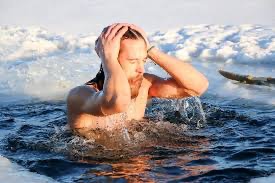
During winter, rolling in the snow or jumping into an ice-hole in a lake or river.
Benefits: The sudden shift from hot to cold is exhilarating. It shocks your system, boosts circulation, strengthens the immune system, and leaves you with energetic but totally relaxed.
The Social Experience
More than just a method of cleansing, the Banya is a social event.
Between Rounds: The experience is typically done in several rounds of heating and cooling. In the resting room (predbannik), you all gather between rounds to relax, chat, and drink water or herbal tea.
Then you all eat meal together, cleansed of the body, with clear the minds, and feeling more bonded after the experience.
Ascoli Satriano Reenactment Fields, Italy This year’s ancient warfare reenactment at Ascoli Satriano was a journey back to the Roman-Samniti wars, reviving a fierce and often overlooked rivalry—the Samnites versus the early Roman Republic. Alongside the historical combat and the authenticity of the costumes, it was the unexpected presence our Baby Alachigh, aka The Nomadic […]
Ascoli Satriano Reenactment Fields, Italy
This year’s ancient warfare reenactment at Ascoli Satriano was a journey back to the Roman-Samniti wars, reviving a fierce and often overlooked rivalry—the Samnites versus the early Roman Republic. Alongside the historical combat and the authenticity of the costumes, it was the unexpected presence our Baby Alachigh, aka The Nomadic Hotel.
⚔️ Recreating the Clash: Rome vs. the Samnites
The reenactment was based loosely on the Battle of Sentinum (295 BC), one of the most pivotal engagements of the Third Samnite War. Dozens of reenactors, clad in linen tunics, leather sandals, armour, ornate belts, bronze helmets and shields showing their tribal allegiance, recreated the organised might of the Roman legions and the fierce, guerilla-style resistance of the Samnite tribes.
Spectators lined the hills as Roman centurions barked commands in Latin, leading maniples in tight formation. Across the field, the Samnites appeared in asymmetric war gear—fitting for a people who fought from mountainous terrain and used surprise and mobility as their greatest weapons.
🏕️ The Alachigh Tent: A Symbol of Spirit and Sanctuary
At the edge of the Samnite camp stood something unfamiliar to many: a rounded, canvas-covered Alachigh, its curved wooden frame up to a metal wheel with its outer walls catching the light of the morning sun. Traditionally used by nomadic tribes of Iran—especially the Shahsevan—the Alachigh served here not just as a visual focal point, but as a symbol of the Samnite fighting spirit.
Though not historically Samnite, the tent was intentionally placed as a creative interpretation—a tribute to the resilience, adaptability, and tribal unity the Samnites embodied. Inside the tent, reenactors held pre-battle plans, had food at the traditional table and snored between battles.
The contrast between this circular, communal space and the rigid geometry of Roman and Samnite camp tents gave guests a visual metaphor: freedom versus order, tribal memory versus imperial discipline.
🛡️ The Power of Immersive History
More than just a battle recreation, the event was a living museum. From a parade though the local town to exhibitions of shields and chain mail to Roman pottery to a stall demonstrating Roman wooden games to samples of Roman food to the beautiful, colourful ballerinas.
Clashing shields, and choreographed charges made the battlefield feel electric with tension and history and the end of each of the two days, all the soldiers, stood up from the ground where they had been killed and marched in form to dramatic music. Everyone watching was awed by the way it would have felt in ancient times.
The inclusion of the Alachigh tent, though not traditionally Italic, reminded all who attended that history isn’t just about what happened—it’s about how we choose to remember and retell it.
Live in Hope, die in Caergwrle, Wales
And then back in Wales….we were contacting by a guy who lives in Hope, Flintshire (yes that’s the town’s real name), and wanted a cover for their Kazakh yurt, which is is a bentwood yurt with a high pitched roof. There is a saying about the neighbouring villages there which is: “”Live in Hope, die in Caergwrle”. The phrase is thought to originate from a time when people who were drunk were kept in a lock-up at the base of Caergwrle Castle overnight, implying they’d “die in Caergwrle” after “living in Hope”.
Park in The Past
He has this place in Hope, called “Park in the Past” which is the only purpose built, Roman fort, in the country and it was a dream of Paul’s (the main guy) for years until he found the right place to ground it. It’s a beautiful location, set on a magnificent lake where a pair of beavers that had magically appeared. Roman tents, conservation, a fort and a beautiful massive wooden structure, for theatre, story telling of ancient times, and possibly costumed weddings. Loads of potential and ideas. It has been visited by a lot of school children, to take them back to the Past visits and the Flintshire County Council Tourist has just woken up to the potential of this resource. https://parkinthepast.org.uk
The thing is the connection between Central Asia and the Roman Empire. There was a path along the Silk Road connecting indirectly Rome and Central Asia. The Romans were partial to their gemstones, spices and silk, the most famous and sought-after commodity, which gave the trade route its name. Its’ popularity became a symbol of extravagance. The Romans knew little about its origin, with some believing it grew on trees. I don’t believe there was, an ancient connection in tents but for Romans to circle the square.
We have gone back down to Italy to do some work on our new land and to do some of our non profit work for the heartland association. In between all the Italian mountain madness, endless lunches, voyages to abandoned villages and so many meetings, we also finalised our smaller alachigh concept tent. We are […]
We have gone back down to Italy to do some work on our new land and to do some of our non profit work for the heartland association. In between all the Italian mountain madness, endless lunches, voyages to abandoned villages and so many meetings, we also finalised our smaller alachigh concept tent.
We are making this tent for an amazing guy called Andrea from the mountain village of Palena, who runs reenactment and historical events in costume. Over 5 years now we have developed an amazing idea, for a nomadic hotel, a new horizon in sustainable tourism, directed for rewilding and safari projects, but one that suits his ideas and work, and is prefect means to explore Italy’s secret region of Abruzzo, one of the wildest mountains regions in Europe.
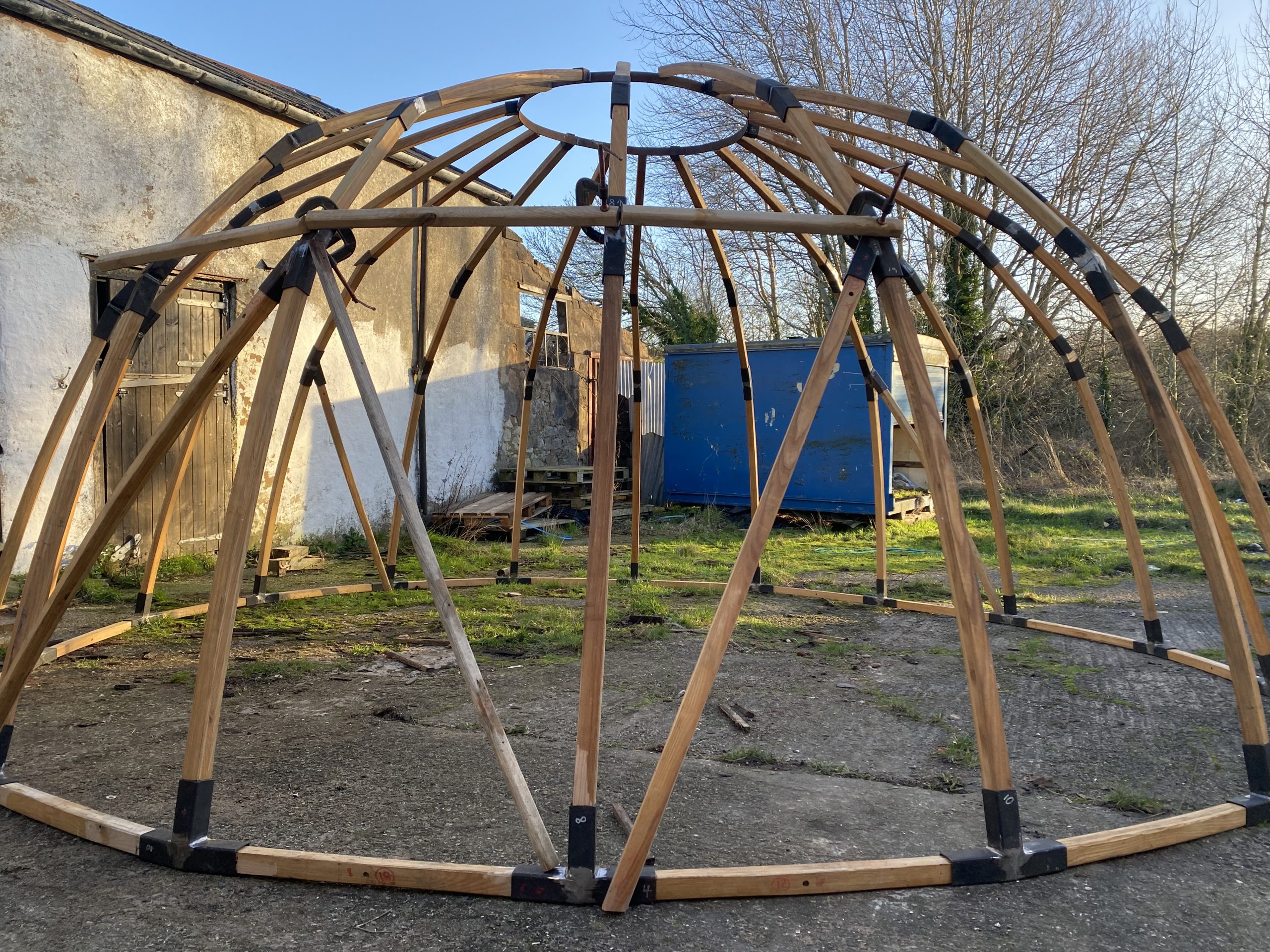
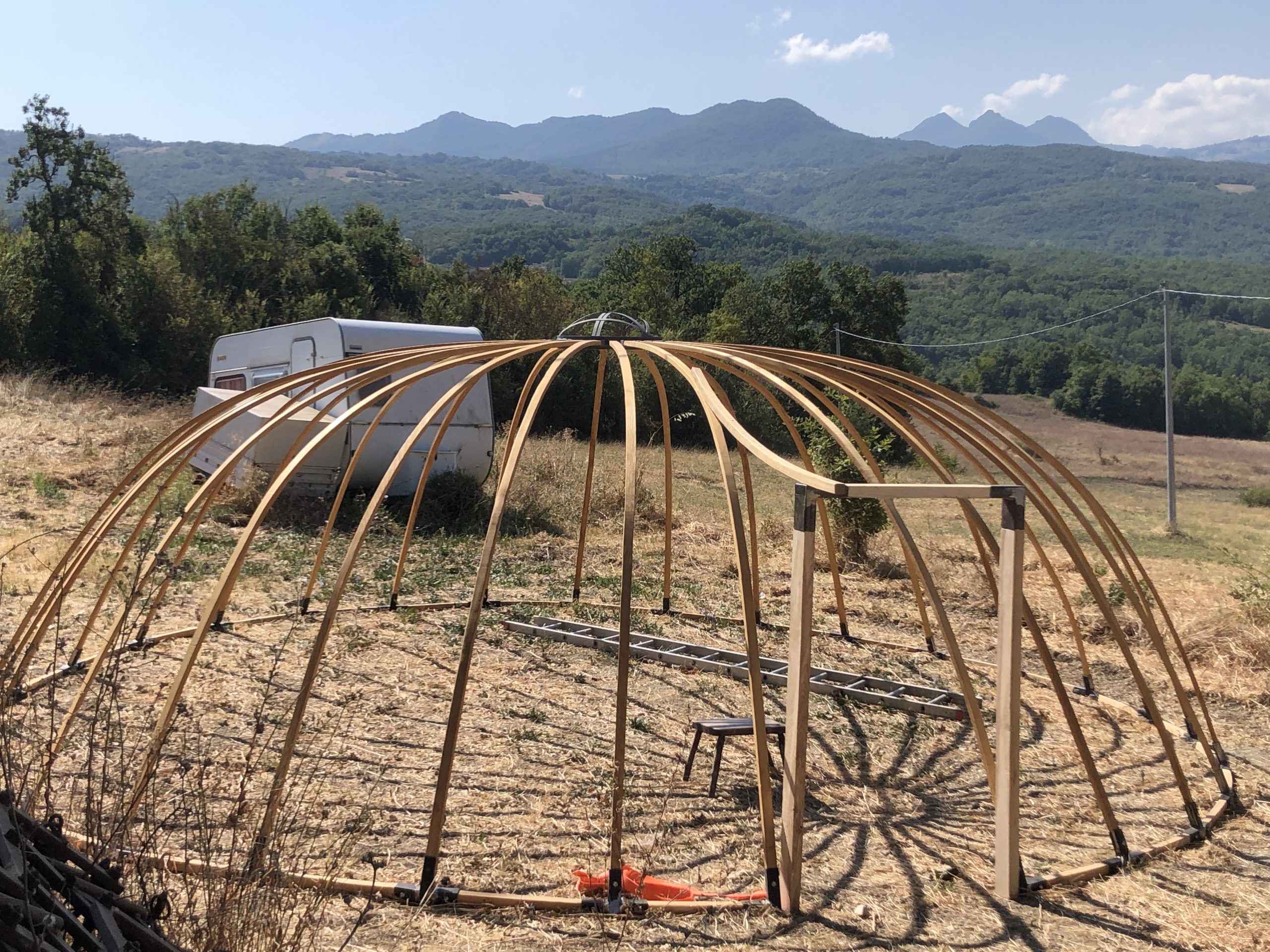
Like our larger Alachigh concept tent this one relies on a rib and connector system, a welded stainless steel wheel, and bottom brackets. Arguably the bottom wooden ring could have been avoided if this tent was to be pitched on a deck, but because we want it to be put up at the end of a day journey at some of the most remote high meadows of Abruzzo, the bottom ring was needed.
You can see the bottom brackets better in this picture below. Its also a little clearer how the bolts work to hold the bottom ring tension, and to lock the rib.
We have set up a new company concept top deal with these new tents, as part of our work to make sure some nomadic tent forms would not get extinct, and like we said the Alachigh which is arguably the best looking nomadic tent in existence, has always too little attention in the west, whilst thousands of yurts were made or imported into Europe there are maybe ten to fifteen examples of Alachighs made, to fight this we have come up with a dedicated concept which we are now turning into the Alachigh company . I argue that whilst we are already building this new company, and looking for someone who may want to buy it as a stand alone business, I also wanted to explore new tourism angles.
I have spent days on end talking with Andrea on how we can create this nomadic hotel, and our 7m Alachigh model was the perfect tent in my mind. It takes one person to set up, the wheel could be lifted with one hand, the 4.5m ribs weigh very little, and can be transported on a roof rack of any 4×4 to the remote locations we see it pitched on. The idea for this new hotel, is to have groups travelling in remote areas, arriving at a secluded location, one that celebrates the best nature a region has, but at the same time I wanted it to take people into contextual tourism, exploring a region in a new way. Andrea has given me endless ideas, in fact it is hard to stop him sometimes, and focus on an end product as he seems to drift into fantasy. But the idea of historical context of a people in a given area, like the Samnites of Abruzzo as a way to explore indigenous culture as a new type of ecological tourism is something that I am really inspired by.
We aim to combine mountain journeys, with archeo foods, taking people into the wildest locations yet arriving at a tribal encampment, with hosts dressed in tribal clothing. Rewilding projects are now popping up like mushrooms after the rain, those are mostly efforts by larger bodies and estates, sometimes when traditional farming is abandoned, what we feel is missing out of most of those is the human element, a way those can turn into rural living schools, and so from a bespoke tourism point of view, teaching people how indigenous groups lived in a given territory, and allowing them to explore low impact and natural connection, travelling not only to a location but into another time is to me the highest form of innovation for ecological tourism.
I was going to end making this tent with the same door design that we used for our larger 10m Alachigh tent, but that morning Andrea again came to examine how I was getting along. He looked at the door I fabricated that morning and decided he did not like it at all.
He just came back from a large gathering of lord of the rings type festival, his mind full of elves and hobbits, he insisted we must be more artistic in our design, so we went for a double curvature on the door poles too.
This was a little of a nightmare to get right because of all the welded angels, plus it created a little pooling issue on top of the door, which we decided to deal with by using three arches on the porch/door.
All in all the tent took quite an interesting shape, even if I had to spend a few more mornings welding brackets at weird angles, it proved the point that the rib and bracket design could in fact accommodate and given shape which is its beauty and the design concept behind bringing those tents back. We replaced both the tension bands and the need for a central anchoring with this new system. I think a little more perfection of the angels top play between the various tensions could be perfected, but this would come with new trial. It is hard to strike a balance between new design and what the market is already used to. We are committed to bringing a higher level of tent design back into the centre of the tourism industry. Contact us to discuss these new tents, or if you also have an urge to create a new type of tourism experience.
Concept TrialNew Door DesignNew Door SideOld Door DesignAndrea (Jason Momoa)Bottom BracketsTesting